The Future of AI in the Ecommerce Industry: Trends, Predictions, and Strategies for 2026
How AI is reshaping ecommerce in 2026 — the top trends, predictions, and practical strategies sellers can use now to personalize, automate, and grow their online stores.

Disclosure: This post contains affiliate links. If you sign up through them, we may earn a
commission at no extra cost to you. We only recommend tools we believe help sellers grow.
Read our full Affiliate & Earnings Disclaimer.
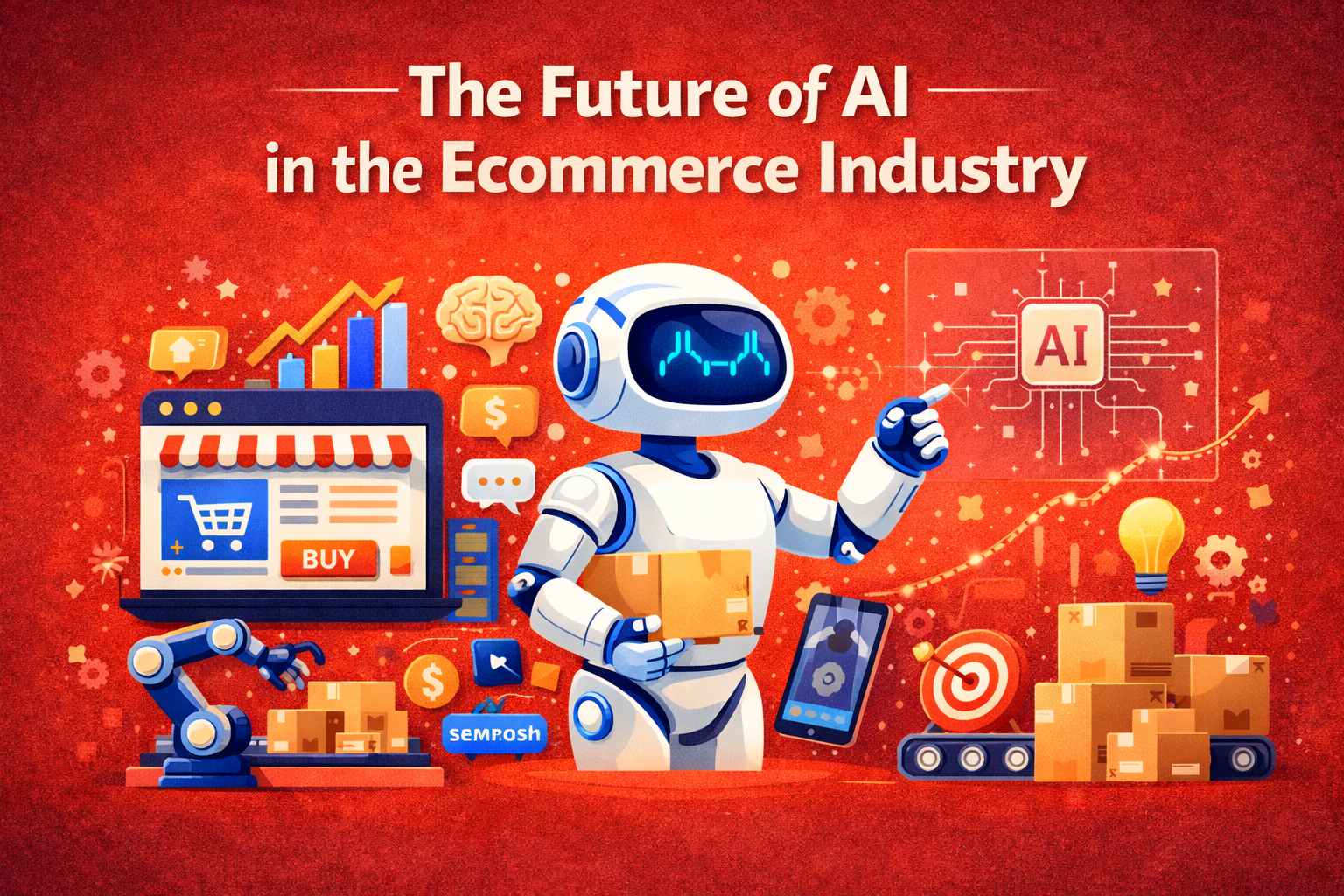
Artificial intelligence has moved from buzzword to backbone in e-commerce. In 2026 it’s no longer a question of whether to use AI, but how fast you can put it to work — personalizing storefronts, automating support, forecasting demand, and creating content at scale. The sellers who understand where this is heading will build leaner, smarter, more profitable stores; those who ignore it will struggle to compete. This guide breaks down the AI trends reshaping e-commerce, what’s coming next, and the practical strategies to turn all of it into real growth for your store.
Key Takeaways
- AI personalization now drives a major share of e-commerce revenue.
- Conversational AI and AI agents are changing how people discover and buy.
- Generative AI slashes the cost of product content, images, and support.
- AI-driven inventory and pricing boost margins and cut waste.
- Small sellers can now access AI tools once reserved for enterprises.
Related reading: See our
best e-commerce tools for sellers and the
ultimate guide to e-commerce SEO to put these trends into practice.
Why AI Is Reshaping E-Commerce
E-commerce generates enormous amounts of data — every click, search, cart, and purchase — and AI is what turns that data into action at a speed and scale no human team can match. It personalizes each shopper’s experience, predicts what they’ll want, automates the repetitive work of running a store, and creates content on demand. The result is a fundamental shift: stores that once needed large teams can now operate lean, and the competitive edge increasingly belongs to sellers who deploy AI thoughtfully. For independent sellers especially, AI has leveled a playing field that used to favor only the biggest players.
7 AI Trends Defining E-Commerce in 2026
1
Hyper-Personalization at Scale
AI now tailors product recommendations, storefronts, search results, and even pricing to each individual shopper in real time. Personalized experiences drive a large and growing share of e-commerce revenue because they surface exactly what a buyer is likely to want — increasing conversions and average order value. Platforms like Shopify and email tools like Klaviyo bake this personalization in.
2
Conversational AI & Shopping Assistants
AI chat assistants now guide shoppers, answer questions, and complete purchases through natural conversation. Beyond support, they act as personal shoppers — understanding intent and recommending products. Tools like Gorgias bring AI-powered support and sales conversations to independent stores.
3
Generative AI for Content & Images
4
AI-Powered Search & Visual Discovery
Shoppers increasingly search by intent, image, and natural language rather than exact keywords. AI-driven site search understands what people mean, and visual search lets buyers find products from a photo — making product data quality and structured content more important than ever for discovery.
5
Predictive Inventory & Demand Forecasting
AI forecasts demand from historical data, seasonality, and trends — reducing both stockouts and overstock. Smarter inventory means healthier cash flow and margins, a benefit that used to be exclusive to large retailers and is now reaching sellers of every size.
6
Dynamic Pricing & Ad Optimization
AI adjusts pricing and reallocates ad spend in real time based on demand, competition, and profitability. Tools like Triple Whale give independent sellers the kind of profit-driven optimization that protects margins and squeezes more return from every ad dollar.
7
Autonomous AI Agents
The newest frontier: AI agents that don’t just assist but act — managing campaigns, reordering stock, adjusting listings, and handling routine operations with minimal oversight. As agents mature, running a store shifts from doing the work to directing the AI that does it.
Predictions: Where E-Commerce AI Is Heading
Several shifts are accelerating. AI-mediated shopping will grow as consumers use assistants like ChatGPT and shopping agents to research and buy — meaning your product data must be optimized for AI to surface (a natural extension of SEO into GEO). Content creation becomes near-free, so the differentiators shift to brand, trust, and unique data. Operations grow increasingly autonomous, freeing owners to focus on strategy and brand. Personalization becomes the baseline expectation rather than a nice-to-have. The through-line: AI won’t replace sellers, but sellers using AI will replace those who don’t.
Strategies to Apply AI in Your Store Now
You don’t need an enterprise budget to benefit. Here’s where to start, by impact:
| Priority | AI Application | Where to Start |
|---|---|---|
| 1 | Personalized email & SMS flows | Klaviyo automation |
| 2 | AI product descriptions & ads | Jasper / ChatGPT |
| 3 | AI customer support | Gorgias AI |
| 4 | Product images & creatives | Canva AI |
| 5 | Ad profit optimization | Triple Whale |
| 6 | AI-ready product data (for search & GEO) | Structured data + SEO tools |
Start here: Personalized email/SMS flows (like abandoned-cart) give the fastest, highest-ROI AI win — set one up before anything else.
The practical approach: pick one high-impact area, implement it well, measure the result, then expand. Layering AI in deliberately beats trying to adopt everything at once.
Challenges & Risks to Watch
AI isn’t magic, and adopting it carelessly creates problems. Watch for over-automation that strips out the human touch customers value; data privacy and compliance obligations as you collect more customer data; accuracy issues and “hallucinations” in AI-generated content that require human review; and an over-reliance that leaves you exposed if a tool changes or fails. The winning approach keeps humans in the loop — using AI to amplify judgment and creativity, not replace them. Authenticity and trust remain your most durable advantages.
Frequently Asked Questions
How is AI used in e-commerce?
AI powers personalized recommendations, chat assistants, generative product content and images, demand forecasting, dynamic pricing, and increasingly autonomous store operations — helping sellers convert more, spend less, and operate leaner.
Can small businesses afford AI e-commerce tools?
Yes. Many tools have free or low-cost tiers — Canva AI, ChatGPT, and email platforms like Klaviyo — so independent sellers can access capabilities once reserved for large retailers.
Will AI replace e-commerce jobs?
AI automates repetitive tasks but doesn’t replace strategy, brand, or creativity. The shift is toward directing AI rather than doing the manual work — sellers who adopt AI outperform those who don’t.
What’s the first AI tool a store should adopt?
Start with AI-powered email/SMS automation (like Klaviyo) — abandoned-cart and post-purchase flows deliver the fastest, highest ROI. Then add AI content and support tools.
How does AI affect e-commerce SEO?
AI-mediated shopping means optimizing product data for AI engines to surface it — an extension of SEO into GEO (generative engine optimization). Clean, structured, unique product content matters more than ever.
Preparing Your Store for the AI Era
AI in e-commerce isn’t a distant future — it’s the present, and the gap between adopters and non-adopters widens every month. Start small: implement one high-impact AI tool like Klaviyo for personalized flows or Jasper for content, measure the result, and expand from there. Keep humans in the loop, protect the trust and authenticity customers value, and treat AI as leverage rather than a replacement. The sellers who thrive in 2026 won’t be the ones with the biggest budgets — they’ll be the ones who put AI to work fastest and smartest.
Want an AI-for-sellers playbook?
Grab our AI e-commerce toolkit — prompt templates, automation checklists, and content frameworks — from the shop, and start applying these trends to your store today.
Browse the Template Shop →