How to Create a Content Marketing Strategy: Templates, Tools & Examples (2026 Guide)

Thinking Process2.25s
Here’s your complete, ready-to-copy blog post article:
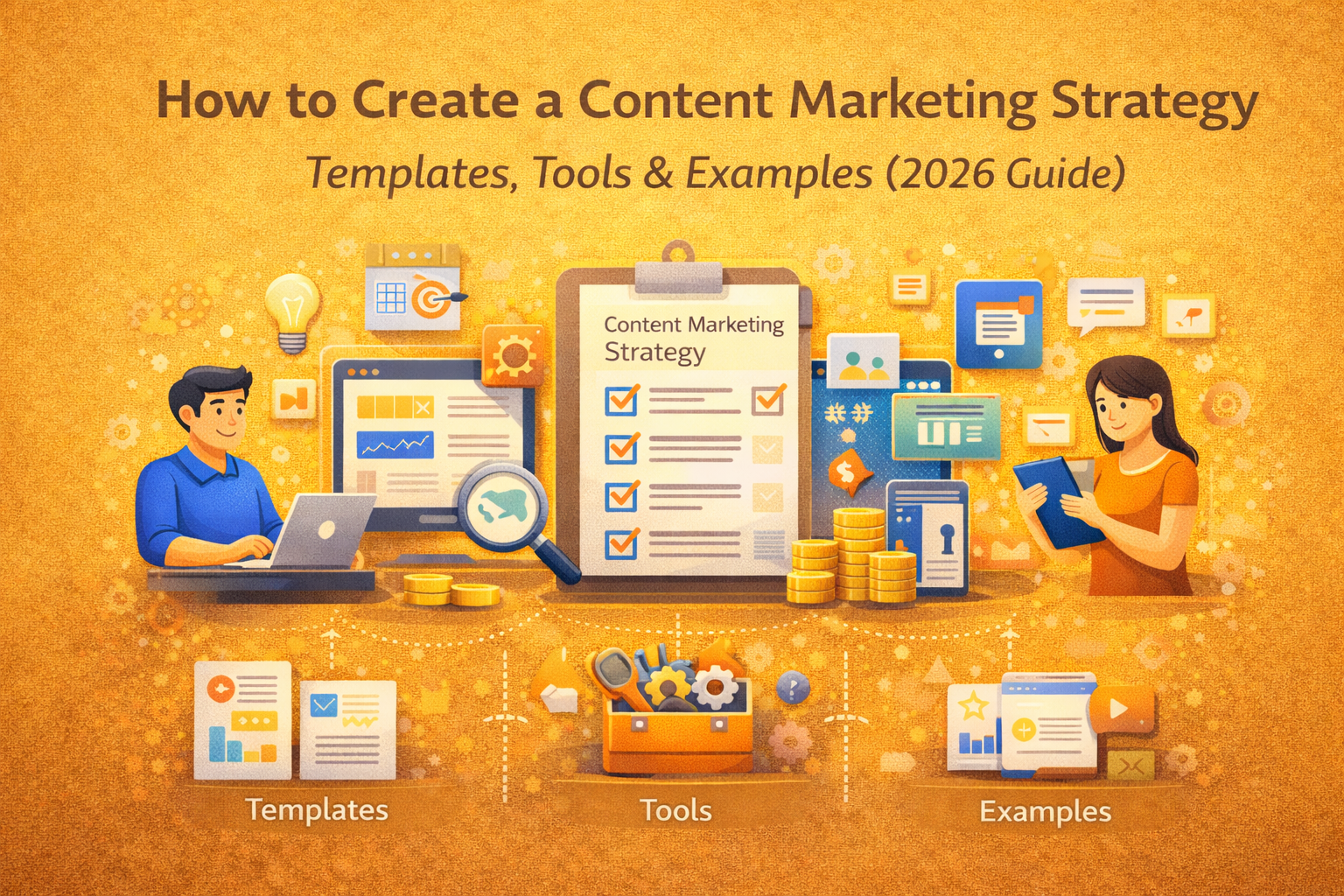
How to Create a Content Marketing Strategy: Templates, Tools & Examples (2026 Guide)
Disclosure: This post contains affiliate links. If you purchase through our links, we may earn a commission at no extra cost to you. We only recommend tools we’ve personally tested.
Publishing content without a strategy is like driving without a destination—you’ll burn fuel, waste time, and end up nowhere meaningful. Yet 63% of businesses still operate without a documented content marketing strategy, wondering why their blog posts don’t generate leads and their social media efforts fall flat.
The difference between content that drives business results and content that disappears into the void? Strategy.
This comprehensive guide walks you through exactly how to create a content marketing strategy that works. You’ll get step-by-step instructions, ready-to-use templates, tool recommendations, and real-world examples you can adapt for your business. By the end, you’ll have everything needed to transform random content creation into a systematic engine for growth.
What Is a Content Marketing Strategy?
A content marketing strategy is a documented plan that defines why you create content, who you create it for, what content you’ll produce, and how you’ll measure success. It’s the foundational blueprint that guides every piece of content your organization produces.
Content Marketing Strategy vs Content Plan vs Content Calendar
These terms are often confused, but they serve different purposes:
| Term | Definition | Scope | Example |
|---|---|---|---|
| Content Strategy | The overarching approach defining goals, audience, and principles | Long-term (6-12 months) | “We create educational content for marketing managers to establish thought leadership and generate leads” |
| Content Plan | The specific content you’ll create to execute the strategy | Medium-term (quarterly) | “Q2: 12 blog posts, 3 case studies, 1 webinar on content marketing topics” |
| Content Calendar | The schedule of when content will be created and published | Short-term (weekly/monthly) | “March 15: Publish ‘Content Strategy Guide,’ March 17: Promote on LinkedIn” |
Your strategy informs your plan, which populates your calendar. Without strategy, your calendar is just a list of random deadlines.
The 8 Core Steps of a Content Strategy
Every effective content marketing strategy includes these elements
Why You Need a Documented Strategy
Companies with documented strategies are:
- 3x more likely to report content marketing success
- More consistent in publishing cadence
- Better aligned across teams and stakeholders
- More efficient with resources and budget
- Able to prove ROI to leadership
If your strategy only exists in your head, it’s not a strategy—it’s a hope.
Step 1: Define Your Goals and KPIs
Every successful content strategy starts with clear goals. Without defined objectives, you can’t measure success or make informed decisions about what content to create.
Common Content Marketing Goals
| Goal Category | Specific Goals | Typical Timeline |
|---|---|---|
| Awareness | Increase organic traffic, grow social following, improve brand recognition | 6-12 months |
| Engagement | Increase time on site, boost social engagement, grow email list | 3-6 months |
| Lead Generation | Generate MQLs, increase demo requests, grow pipeline | 3-6 months |
| Sales Enablement | Shorten sales cycle, improve close rates, support sales conversations | 3-6 months |
| Customer Success | Reduce support tickets, improve onboarding, increase retention | Ongoing |
| Thought Leadership | Earn backlinks, secure speaking opportunities, gain media coverage | 12+ months |
How to Set SMART Content Goals
Transform vague aspirations into actionable goals using the SMART framework:
| Component | Question | Example |
|---|---|---|
| Specific | What exactly will you achieve? | Increase organic blog traffic |
| Measurable | How will you track progress? | Measured via Google Analytics sessions |
| Achievable | Is this realistic? | Based on current growth trajectory |
| Relevant | Does this support business objectives? | More traffic = more lead opportunities |
| Time-bound | When will you achieve this? | Within 6 months |
SMART Goal Example: “Increase organic blog traffic from 10,000 to 25,000 monthly sessions within 6 months by publishing 12 SEO-optimized articles targeting high-volume keywords.”
Content Marketing KPIs to Track
| Goal | Primary KPIs | Secondary KPIs |
|---|---|---|
| Awareness | Organic traffic, impressions, reach | New users, branded searches |
| Engagement | Time on page, scroll depth, comments | Pages per session, return visitors |
| Lead Generation | Conversion rate, leads generated, email signups | Lead quality score, MQL rate |
| Sales | Revenue attributed, deals influenced | Sales cycle length, content usage by sales |
| Retention | Churn rate, NPS, support tickets | Feature adoption, customer engagement |
Template: Content Marketing Goals Worksheet
| Goal Category | Specific Goal | Primary KPI | Current Baseline | Target | Timeline | Owner |
|---|---|---|---|---|---|---|
| Awareness | Increase organic traffic | Monthly sessions | 10,000 | 25,000 | 6 months | [Name] |
| Lead Gen | Generate marketing leads | MQLs/month | 50 | 150 | 6 months | [Name] |
| Engagement | Improve content engagement | Avg. time on page | 2:30 | 4:00 | 3 months | [Name] |
| Authority | Build backlink profile | Referring domains | 100 | 250 | 12 months | [Name] |
Step 2: Research and Define Your Target Audience
Content created for “everyone” resonates with no one. Deep audience understanding is the foundation of content that connects.
How to Create Audience Personas
Effective personas go beyond demographics to capture motivations, challenges, and behaviors:
Template: Audience Persona
PERSONA NAME: Marketing Mary

DEMOGRAPHICS:
- Age: 35-45
- Job Title: Marketing Manager
- Company Size: 50-200 employees
- Industry: B2B SaaS
- Location: Urban, United States

PROFESSIONAL CONTEXT:
- Reports to: VP of Marketing or CMO
- Team Size: 2-5 people
- Budget Authority: $50K-$200K annually
- Tools Currently Using: HubSpot, Google Analytics, Canva

GOALS:
- Primary: Generate more qualified leads
- Secondary: Prove marketing ROI to leadership
- Career: Advance to Director/VP role

CHALLENGES:
- Limited budget and small team
- Too many tools, not enough integration
- Difficulty measuring content ROI
- Keeping up with marketing trends

CONTENT PREFERENCES:
- Formats: How-to guides, templates, case studies
- Channels: LinkedIn, email newsletters, Google search
- Consumption Time: Morning commute, lunch breaks
- Content Length: Prefers actionable, scannable content

SEARCH BEHAVIOR:
- Common Searches: "content marketing strategy template,"
  "how to measure content ROI," "marketing automation for small teams"
- Information Sources: Industry blogs, LinkedIn, marketing podcasts
- Trusted Brands: HubSpot, Semrush, Content Marketing Institute

OBJECTIONS TO ADDRESS:
- "I don't have time to create all this content"
- "My boss wants leads, not blog posts"
- "Content marketing takes too long to show results"

HOW WE HELP:
- Provide templates that save time
- Show clear ROI calculations
- Offer quick-win strategies alongside long-term plays
Audience Research Methods
| Method | What You Learn | Tools |
|---|---|---|
| Customer Interviews | Deep motivations, language, objections | Zoom, phone calls |
| Surveys | Quantitative preferences, priorities | Typeform, SurveyMonkey |
| Sales Team Input | Common questions, objections, deal-breakers | Internal meetings |
| Support Ticket Analysis | Pain points, confusion areas | Help desk software |
| Social Listening | Conversations, sentiment, trends | Brand24, Mention |
| Keyword Research | Search intent, questions asked | Semrush, Ahrefs |
| Analytics Review | Content performance, user behavior | Google Analytics, Hotjar |
| Competitor Analysis | Gaps in market, audience engagement | Manual review, BuzzSumo |
Understanding Search Intent
Every piece of content should match user intent:
| Intent Type | User Goal | Content Types | Keywords Signals |
|---|---|---|---|
| Informational | Learn something | Blog posts, guides, tutorials | “how to,” “what is,” “guide” |
| Commercial | Research options | Comparisons, reviews, lists | “best,” “vs,” “review,” “top” |
| Transactional | Take action | Product pages, pricing, demos | “buy,” “pricing,” “free trial” |
| Navigational | Find specific page | Brand pages, login pages | Brand names, specific products |
Step 3: Conduct a Content Audit
Before creating new content, understand what you already have. A content audit reveals opportunities, gaps, and content that needs attention.
What to Include in a Content Audit
Catalog every piece of content with these data points:
| Data Point | Why It Matters |
|---|---|
| URL | Unique identifier |
| Title | Content identification |
| Content Type | Format categorization |
| Topic/Category | Thematic organization |
| Word Count | Depth assessment |
| Publish Date | Freshness evaluation |
| Last Updated | Maintenance tracking |
| Organic Traffic | Performance measurement |
| Backlinks | Authority indicator |
| Conversions | Business impact |
| Target Keyword | SEO alignment |
| Content Score | Quality assessment |
How to Evaluate Existing Content
Score each piece and assign an action:
| Score | Criteria | Action |
|---|---|---|
| A (Keep) | High traffic, conversions, or backlinks; still relevant | Promote more, update annually |
| B (Update) | Good foundation but outdated information or declining traffic | Refresh with new data, improve SEO |
| C (Consolidate) | Multiple pieces on same topic competing with each other | Merge into one comprehensive piece |
| D (Remove) | Low traffic, outdated, off-brand, or thin content | Delete or redirect |
Content Gap Analysis
After auditing, identify what’s missing:
Template: Content Audit Spreadsheet
| URL | Title | Type | Topic | Publish Date | Monthly Traffic | Backlinks | Conversions | Score | Action |
|---|---|---|---|---|---|---|---|---|---|
| /blog/post-1 | Content Strategy Guide | Blog | Strategy | 2025-01-15 | 2,500 | 35 | 45 | A | Promote |
| /blog/post-2 | Marketing Tips | Blog | General | 2024-03-20 | 150 | 3 | 2 | D | Remove |
| /guide/seo-basics | SEO Fundamentals | Guide | SEO | 2024-08-10 | 1,200 | 22 | 28 | B | Update |
Step 4: Choose Your Content Types and Channels
Not all content types work for all goals. Match your formats and channels to your strategy.
Content Types Comparison Table
| Content Type | Best For | Effort Level | SEO Value | Lead Gen | Lifespan |
|---|---|---|---|---|---|
| Blog Posts | Organic traffic, awareness | Medium | ⭐⭐⭐⭐⭐ | ⭐⭐⭐ | 1-3 years |
| Long-Form Guides | Authority, backlinks | High | ⭐⭐⭐⭐⭐ | ⭐⭐⭐⭐ | 2-5 years |
| Case Studies | Sales enablement, proof | Medium | ⭐⭐⭐ | ⭐⭐⭐⭐⭐ | 1-2 years |
| White Papers | B2B lead generation | High | ⭐⭐⭐ | ⭐⭐⭐⭐⭐ | 1-2 years |
| Templates/Tools | Lead magnets, backlinks | Medium-High | ⭐⭐⭐⭐ | ⭐⭐⭐⭐⭐ | 2-5 years |
| Infographics | Social shares, backlinks | High | ⭐⭐⭐ | ⭐⭐ | 1-2 years |
| Videos | Engagement, YouTube SEO | High | ⭐⭐⭐ | ⭐⭐⭐ | 1-3 years |
| Podcasts | Brand building, loyalty | Medium | ⭐⭐ | ⭐⭐⭐ | Ongoing |
| Webinars | Lead generation, authority | High | ⭐ | ⭐⭐⭐⭐⭐ | 6-12 months |
| Email Newsletter | Nurturing, retention | Low | — | ⭐⭐⭐⭐ | Weekly |
| Social Posts | Awareness, engagement | Low | ⭐ | ⭐⭐ | 1-7 days |
Matching Content Types to Goals
| Primary Goal | Recommended Content Types |
|---|---|
| Organic traffic growth | Blog posts, long-form guides, templates |
| Lead generation | Webinars, white papers, templates, case studies |
| Brand awareness | Social content, videos, podcasts, infographics |
| Sales enablement | Case studies, comparison pages, ROI calculators |
| Customer retention | Email newsletters, how-to tutorials, community content |
| Thought leadership | Original research, opinion pieces, speaking content |
Channel Selection Framework
| Channel | Best For | Content Types | Effort | Reach |
|---|---|---|---|---|
| Website/Blog | SEO, owned audience | All long-form | Medium | Organic |
| Nurturing, retention | Newsletters, promotions | Low | Owned list | |
| B2B, professional audience | Articles, posts, videos | Medium | Organic + Paid | |
| Twitter/X | Real-time, tech audience | Short posts, threads | Low | Organic |
| YouTube | Tutorials, entertainment | Video content | High | Organic + Paid |
| Visual brands, B2C | Images, Stories, Reels | Medium | Organic + Paid | |
| TikTok | Younger audience, viral | Short videos | Medium | Organic |
| Visual discovery, DIY | Infographics, guides | Low | Organic | |
| Podcast Platforms | Loyal audience, commuters | Audio content | Medium | Organic |
Step 5: Build Your Content Calendar
A content calendar transforms strategy into action by scheduling what gets created and when.
Content Calendar Components
Every calendar entry should include:
- Publish Date — When content goes live
- Content Type — Format (blog, video, social, etc.)
- Title/Topic — Working title or topic description
- Target Keyword — Primary SEO keyword
- Funnel Stage — Awareness, consideration, or decision
- Owner — Person responsible for creation
- Status — Idea, drafting, review, scheduled, published
- Distribution Channels — Where content will be promoted
Content Cadence Recommendations
| Business Type | Blog Posts | Social Media | Video | |
|---|---|---|---|---|
| Startup/Small Business | 2-4/month | Daily | Weekly | 1-2/month |
| Mid-Size Business | 4-8/month | Daily | 2x/week | 2-4/month |
| Enterprise | 8-16/month | Multiple daily | Daily | 4-8/month |
| Personal Brand | 1-2/month | Daily | Weekly | 2-4/month |
Important: Consistency beats volume. A sustainable schedule you maintain is better than an ambitious schedule you abandon.
Template: Content Calendar
| Week | Publish Date | Type | Title | Keyword | Funnel Stage | Owner | Status | Channels |
|---|---|---|---|---|---|---|---|---|
| W1 | Mar 3 | Blog | Content Strategy Guide | content marketing strategy | Awareness | Sarah | Draft | Blog, LinkedIn, Email |
| W1 | Mar 4 | Social | Strategy tips carousel | — | Awareness | Mike | Scheduled | LinkedIn, Instagram |
| W2 | Mar 10 | Case Study | Client Success Story | — | Consideration | Sarah | In Review | Blog, Email, Sales |
| W2 | Mar 12 | Weekly newsletter | — | Engagement | Lisa | Draft | ||
| W3 | Mar 17 | Blog | SEO Tools Comparison | best seo tools | Consideration | Sarah | Idea | Blog, LinkedIn |
| W4 | Mar 24 | Webinar | Content Strategy Workshop | — | Lead Gen | Team | Planning | Email, LinkedIn, Ads |
Content Calendar Tools
| Tool | Best For | Starting Price | Official Link |
|---|---|---|---|
| Notion | Flexible databases, team wikis | Free – $10/mo | https://www.notion.so |
| Asana | Task management, workflows | Free – $10.99/mo | https://asana.com |
| Monday.com | Visual calendars, automations | $9/user/mo | https://monday.com |
| CoSchedule | Marketing-specific calendar | $29/mo | https://coschedule.com |
| Trello | Simple kanban boards | Free – $5/mo | https://trello.com |
| Airtable | Spreadsheet-database hybrid | Free – $20/mo | https://www.airtable.com |
| Google Sheets | Budget-friendly, collaborative | Free | https://sheets.google.com |
Step 6: Create Your Content Production Workflow
A defined workflow ensures consistent quality and efficient production.
Content Creation Process
| Phase | Activities | Owner | Deliverable |
|---|---|---|---|
| 1. Ideation | Keyword research, topic brainstorming, audience needs analysis | Strategist | Approved topic list |
| 2. Briefing | Create content brief with requirements, outline, SEO targets | Strategist | Content brief |
| 3. Creation | Write first draft following brief | Writer | Draft content |
| 4. Editing | Review for quality, accuracy, brand voice | Editor | Edited draft |
| 5. SEO Review | Optimize for target keywords, add internal links | SEO Specialist | Optimized content |
| 6. Design | Create visuals, format for publication | Designer | Final assets |
| 7. Approval | Final stakeholder review | Manager | Approved content |
| 8. Publication | Upload, schedule, publish | Publisher | Live content |
| 9. Promotion | Distribute across channels | Marketing | Distribution complete |
| 10. Analysis | Track performance, gather insights | Analyst | Performance report |
Template: Content Brief
CONTENT BRIEF

BASICS:
- Working Title: How to Create a Content Marketing Strategy
- Target Keyword: content marketing strategy (volume: 12,000/mo)
- Secondary Keywords: content strategy template, content plan, content marketing plan
- Content Type: Comprehensive Guide
- Target Word Count: 3,500-4,000 words
- Target Publish Date: March 15, 2026
- Writer: [Name]
- Editor: [Name]

AUDIENCE:
- Primary Persona: Marketing Manager at mid-size company
- Funnel Stage: Awareness → Consideration
- Search Intent: Informational

GOALS:
- Primary: Rank for target keyword, drive organic traffic
- Secondary: Generate template downloads (lead magnet)
- CTA: Download content strategy template

OUTLINE:
H1: How to Create a Content Marketing Strategy
  H2: What Is a Content Marketing Strategy?
  H2: Step 1: Define Your Goals
  [Continue with full outline...]

REQUIREMENTS:
- Include at least 3 actionable templates
- Add comparison tables for tools
- Include real examples
- Minimum 5 internal links
- Cite 3+ authoritative external sources

COMPETITOR REFERENCE:
- URL 1: [Top ranking competitor] — Beat by: more templates, recent data
- URL 2: [Second competitor] — Beat by: better examples, more actionable

SEO CHECKLIST:
□ Keyword in title, H1, first 100 words
□ Keyword in 2-3 H2s naturally
□ Include FAQ section for featured snippets
□ Add table of contents for long-form
□ Optimize meta description (under 160 chars)
Content Production Tools
| Tool | Purpose | Starting Price | Official Link |
|---|---|---|---|
| Jasper | AI writing assistance | $49/mo | https://www.jasper.ai |
| Surfer SEO | Content optimization | $89/mo | https://surferseo.com |
| Grammarly | Writing enhancement | Free – $12/mo | https://www.grammarly.com |
| Hemingway | Readability improvement | Free / $19.99 | https://hemingwayapp.com |
| Canva | Visual content creation | Free – $15/mo | https://www.canva.com |
| Loom | Video creation | Free – $15/mo | https://www.loom.com |
| Google Docs | Collaborative writing | Free | https://docs.google.com |
Step 7: Plan Your Content Distribution Strategy
Creating great content is only half the battle. Distribution determines whether anyone actually sees it.
The 3 Pillars of Distribution
| Pillar | Definition | Examples | Control Level |
|---|---|---|---|
| Owned | Channels you control | Website, blog, email list, app | Full control |
| Earned | Exposure through others | Press coverage, backlinks, shares, mentions | No control |
| Paid | Exposure you pay for | Ads, sponsorships, influencer partnerships | Controlled by budget |
Content Promotion Checklist
Immediately upon publishing:
- Share on company social media profiles
- Post in relevant LinkedIn/Facebook groups
- Send to email list
- Share in team Slack for employee amplification
- Submit to relevant communities (Reddit, Hacker News, etc.)
Within first week:
- Repurpose into social media snippets
- Create email sequence featuring content
- Reach out to people/brands mentioned for shares
- Update internal links from related content
Ongoing:
- Add to relevant email nurture sequences
- Include in sales enablement materials
- Consider paid promotion for top performers
- Pitch for link building/guest post opportunities
- Repurpose into other formats (video, podcast, etc.)
Repurposing Framework
Transform one piece of content into many:
| Original Content | Repurposed Formats |
|---|---|
| Blog Post | Social posts, email excerpt, infographic, video script, podcast talking points, SlideShare |
| Webinar | Blog post, YouTube video, podcast episode, social clips, email series, quote graphics |
| Podcast | Blog transcript, audiogram clips, quote graphics, YouTube video, newsletter content |
| Case Study | Social proof posts, sales deck slides, email testimonials, website quotes |
| Research Report | Multiple blog posts, infographic, social stats, press release, webinar |
Distribution Tools
| Tool | Purpose | Starting Price | Official Link |
|---|---|---|---|
| Buffer | Social media scheduling | Free – $6/channel/mo | https://buffer.com |
| Hootsuite | Enterprise social management | $99/mo | https://www.hootsuite.com |
| Mailchimp | Email marketing | Free – $13/mo | https://mailchimp.com |
| ConvertKit | Email for creators | Free – $15/mo | https://convertkit.com |
| HubSpot | Marketing automation | Free – $50/mo | https://www.hubspot.com |
| ActiveCampaign | Email automation | $29/mo | https://www.activecampaign.com |
Step 8: Measure, Analyze, and Optimize
What gets measured gets improved. Build measurement into your strategy from day one.
Essential Content Marketing Metrics
| Category | Metrics | Tools |
|---|---|---|
| Consumption | Page views, unique visitors, time on page, scroll depth | Google Analytics, Hotjar |
| Engagement | Comments, shares, likes, email opens/clicks | Native analytics, email platform |
| SEO | Organic traffic, keyword rankings, backlinks | Google Search Console, Semrush |
| Lead Generation | Conversion rate, leads generated, email signups | Google Analytics, CRM |
| Revenue | Revenue attributed, deals influenced, customer value | CRM, attribution tools |
How to Build a Content Dashboard
Create a monthly dashboard tracking:
Top-Level Metrics:
- Total organic sessions (vs. previous month/year)
- Total leads from content
- Top 10 performing pieces by traffic
- New content published
- Backlinks earned
Content Performance:
- Traffic by content type
- Conversion rates by content type
- Top converting content pieces
- Content with declining traffic
SEO Metrics:
- Keyword rankings changes
- New keywords ranking
- Domain authority trend
- Backlinks earned
Monthly Content Review Process
Week 1: Gather data and populate dashboard
Week 2: Analyze performance
- What content performed best? Why?
- What underperformed? What can we learn?
- Are we hitting our goals?
Week 3: Optimize
- Update underperforming content
- Double down on what’s working
- Adjust upcoming calendar based on insights
Week 4: Plan
- Finalize next month’s content calendar
- Assign resources and responsibilities
- Set specific targets
Analytics Tools
| Tool | Purpose | Starting Price | Official Link |
|---|---|---|---|
| Google Analytics 4 | Web analytics | Free | https://analytics.google.com |
| Google Search Console | Search performance | Free | https://search.google.com/search-console |
| Semrush | SEO analytics | $139.95/mo | https://www.semrush.com |
| Hotjar | Behavior analytics | Free – $39/mo | https://www.hotjar.com |
| Databox | Dashboard builder | Free – $72/mo | https://databox.com |
Content Marketing Strategy Examples
Example 1: B2B SaaS Content Strategy
Company: Project management software ($50/user/month)
Goal: Generate 200 demo requests/month
AUDIENCE: Operations managers at 50-500 employee companies

CONTENT MIX:
- 60% SEO blog posts (awareness)
- 20% Case studies (consideration)
- 10% Comparison pages (decision)
- 10% Templates/tools (lead magnets)

TOPIC CLUSTERS:
1. Project management best practices
2. Team productivity
3. Remote collaboration
4. Workflow automation

DISTRIBUTION:
- Primary: Organic search, LinkedIn
- Secondary: Email nurture, retargeting ads

SAMPLE CONTENT MAP:
- Awareness: "How to Manage Projects Effectively" (blog)
- Consideration: "Project Management Software Comparison" (guide)
- Decision: "How [Customer] Increased Productivity 40%" (case study)

SUCCESS METRICS:
- 50K monthly organic traffic
- 500 MQLs/month
- 200 demo requests/month
Example 2: E-commerce Content Strategy
Company: Sustainable fashion brand
Goal: Increase organic revenue by 40%
AUDIENCE: Eco-conscious millennials and Gen Z

CONTENT MIX:
- 40% Product-focused SEO content
- 30% Lifestyle/educational blog
- 20% User-generated content
- 10% Video content

TOPIC CLUSTERS:
1. Sustainable fashion guides
2. Capsule wardrobe building
3. Fabric and material education
4. Ethical brand spotlights

DISTRIBUTION:
- Primary: Pinterest, Instagram, organic search
- Secondary: Email, TikTok

SAMPLE CONTENT MAP:
- Awareness: "How to Build a Sustainable Wardrobe" (guide)
- Consideration: "Best Organic Cotton T-Shirts" (product roundup)
- Decision: "Customer Style Stories" (UGC feature)

SUCCESS METRICS:
- 100K monthly organic sessions
- 15% increase in organic conversion rate
- 40% increase in organic revenue
Example 3: Local Business Content Strategy
Company: Dental practice in Austin, TX
Goal: 50 new patient appointments/month
AUDIENCE: Families and professionals within 10-mile radius

CONTENT MIX:
- 50% Local SEO pages
- 30% Dental health education
- 20% Practice/team content

TOPIC CLUSTERS:
1. Dental services in Austin (local SEO)
2. Dental health tips
3. Insurance and payment guides
4. Patient experience

DISTRIBUTION:
- Primary: Google Business Profile, local search
- Secondary: Facebook, email reminders

SAMPLE CONTENT MAP:
- Awareness: "Best Dentist in [Neighborhood]" (local landing page)
- Consideration: "What to Expect at Your First Visit" (blog)
- Decision: "Patient Testimonials" (video)

SUCCESS METRICS:
- #1-3 rankings for local dental keywords
- 50 new patient bookings/month
- 4.8+ Google rating
Example 4: Personal Brand Content Strategy
Creator: Marketing consultant
Goal: Book 5 clients/month at $5K+ projects
AUDIENCE: Startup founders needing marketing help

CONTENT MIX:
- 40% LinkedIn posts (daily)
- 30% Newsletter (weekly)
- 20% Long-form guides (monthly)
- 10% Podcast appearances

TOPIC CLUSTERS:
1. Growth marketing tactics
2. Startup marketing playbooks
3. Marketing career insights
4. Industry commentary

DISTRIBUTION:
- Primary: LinkedIn organic
- Secondary: Email newsletter, Twitter

SAMPLE CONTENT MAP:
- Awareness: Daily LinkedIn tips (visibility)
- Consideration: "The Startup Marketing Playbook" (guide)
- Decision: Client results posts (proof)

SUCCESS METRICS:
- 25K LinkedIn followers
- 5K newsletter subscribers
- 5 inbound leads/month
- 5 clients/month
Free Content Marketing Strategy Templates
Here’s a summary of all templates included in this guide:
| Template | Purpose | Format |
|---|---|---|
| Content Marketing Goals Worksheet | Define and track strategic goals | Table |
| Audience Persona Template | Document target audience details | Structured form |
| Content Audit Spreadsheet | Evaluate existing content | Spreadsheet |
| Content Calendar Template | Schedule content production | Spreadsheet |
| Content Brief Template | Guide content creation | Document |
All templates above can be recreated in Google Sheets, Notion, or your preferred tool.
Common Content Strategy Mistakes to Avoid
| Mistake | Why It Fails | Solution |
|---|---|---|
| No documented strategy | No alignment, inconsistent execution | Write it down, share with team |
| Skipping audience research | Content doesn’t resonate | Invest in personas first |
| Creating only awareness content | No path to conversion | Balance all funnel stages |
| Inconsistent publishing | Audience loses trust, SEO suffers | Set sustainable cadence |
| No distribution plan | Great content goes unseen | Plan promotion before creation |
| Ignoring SEO | Missing organic traffic opportunity | Integrate keywords from start |
| Chasing vanity metrics | Traffic without business impact | Focus on conversion metrics |
| Not repurposing | Inefficient resource use | Build repurposing into workflow |
| Copying competitors | No differentiation | Find your unique angle |
| No measurement | Can’t improve what you don’t track | Build dashboards from day one |
Frequently Asked Questions
How long does it take to create a content marketing strategy?
A basic content marketing strategy can be created in 1-2 weeks. A comprehensive strategy with full audience research, content audit, and detailed planning typically takes 4-6 weeks. The initial strategy is a starting point—expect to refine it continuously based on performance data and changing business needs.
How often should I update my content strategy?
Review your strategy quarterly and make minor adjustments based on performance data. Conduct a major strategy review annually or when significant business changes occur (new products, market shifts, rebranding). Your content calendar should be updated weekly or monthly based on the strategic framework.
What’s the difference between content strategy and content marketing?
Content strategy is the planning and governance of content—defining why you create content, for whom, and how you’ll measure success. Content marketing is the execution—actually creating and distributing content to attract and engage an audience. Strategy comes first; marketing follows.
How much should I budget for content marketing?
Most companies allocate 25-30% of their total marketing budget to content marketing. For small businesses, this might mean 2,000−5,000/month. Mid-size companies typically spend 5,000−20,000/month. Enterprise organizations may invest $50,000+/month. Start with what you can sustain consistently, then scale based on ROI.
Can small businesses do content marketing effectively?
Absolutely. Small businesses can compete effectively by focusing on niche topics where they have expertise, emphasizing local SEO if relevant, maintaining consistency over volume, leveraging AI tools to increase efficiency, and repurposing content across multiple channels. The key is a focused strategy rather than trying to do everything.
Conclusion: Your 30-Day Content Strategy Action Plan
You now have everything needed to create a content marketing strategy that drives real business results. Here’s your implementation timeline:
Week 1: Foundation
- Define 3-5 SMART content goals
- Create 2-3 audience personas
- Choose your primary content types and channels
Week 2: Audit & Plan
- Complete content audit of existing assets
- Identify content gaps and opportunities
- Set up your content calendar tool
Week 3: Systems
- Create content brief template
- Document your production workflow
- Set up analytics dashboard
Week 4: Execute
- Plan first month of content
- Create first piece of strategic content
- Establish promotion checklist
Remember: A good strategy executed consistently beats a perfect strategy never implemented. Start with the fundamentals, measure what matters, and improve continuously.
Your content marketing strategy is a living document. Review it regularly, learn from your data, and evolve your approach as you discover what resonates with your audience. The businesses that win at content marketing aren’t necessarily those with the biggest budgets—they’re the ones with the clearest strategies and the discipline to execute consistently.
Start today. Your future audience is waiting.