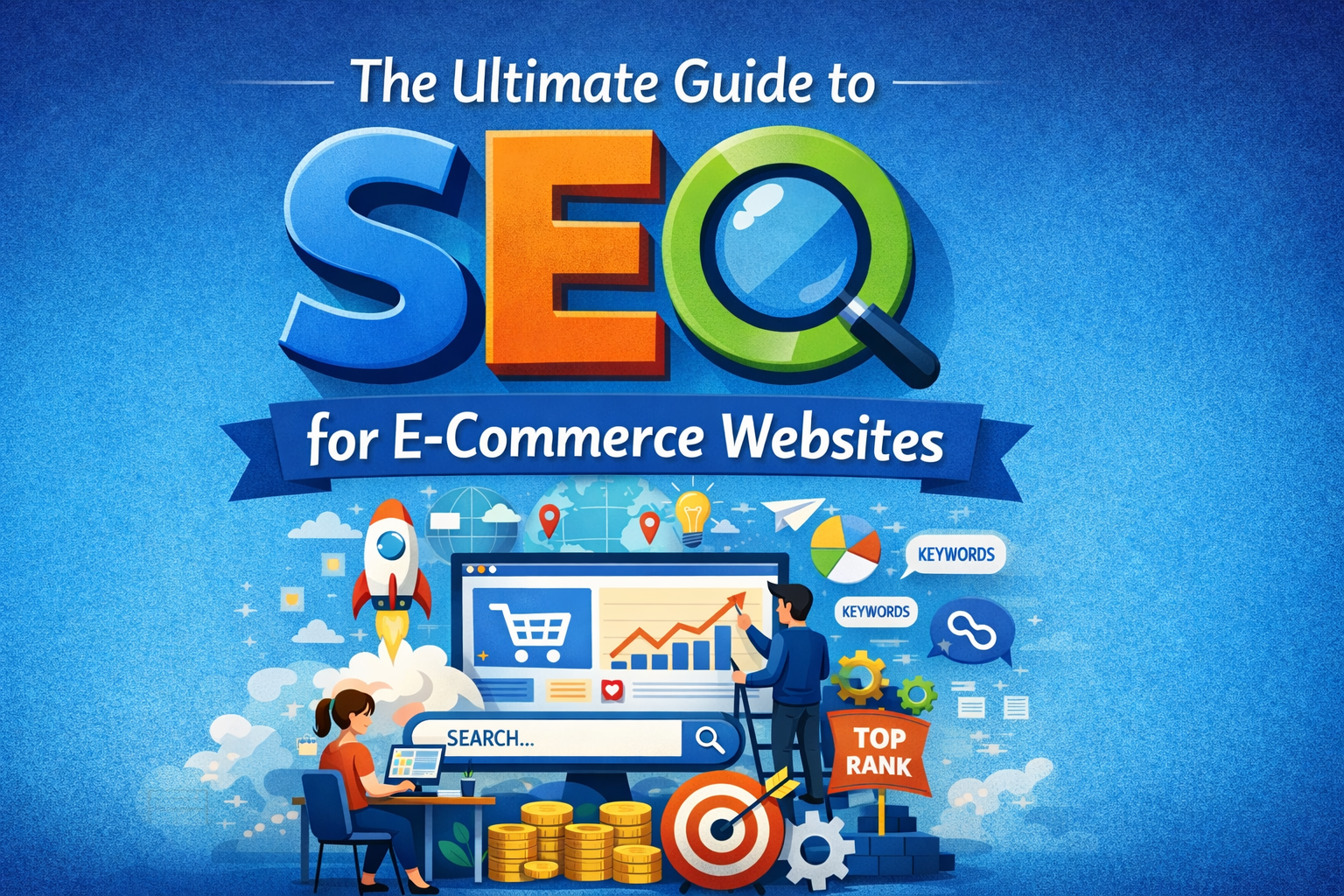
The Ultimate Guide to SEO for E-Commerce Websites (2026)
The ultimate guide to e-commerce SEO — keyword research, on-page and technical optimization, site architecture, content, and link building to rank your store and drive free buyer traffic.

Disclosure: This post contains affiliate links. If you sign up through them, we may earn a
commission at no extra cost to you. We only recommend tools we believe help sellers rank and grow.
Read our full Affiliate & Earnings Disclaimer.
For an online store, SEO is the difference between a website nobody finds and one that quietly brings in buyers every day — for free. Unlike paid ads that stop the moment your budget runs out, e-commerce SEO compounds: optimize a product or category page once, and it can rank and sell for years. This ultimate guide walks you through everything that actually moves the needle — keyword research, on-page optimization, site architecture, technical SEO, content, and link building — so you can turn your store into a search-traffic machine.
Key Takeaways
- E-commerce SEO drives free, high-intent buyer traffic that compounds over time.
- Category pages often rank better than product pages — optimize both.
- Site architecture and technical health are make-or-break at scale.
- Unique product descriptions and reviews beat manufacturer copy every time.
- The right tools speed up keyword research, audits, and tracking dramatically.
Related reading: Pair this with our
best e-commerce tools for sellers and our
Semrush vs Ahrefs vs Moz comparison to pick your SEO stack.
Why E-Commerce SEO Matters
Most online shopping journeys begin with a search — and the vast majority of clicks go to the first few organic results. For a store, that means the difference between page one and page three is the difference between a thriving business and a ghost town. E-commerce SEO is uniquely powerful because search traffic is high-intent: someone searching “waterproof hiking boots size 10” is far closer to buying than someone idly scrolling social media. And unlike ads, which cost you every click, organic rankings keep delivering that buyer traffic long after the work is done. SEO is the highest-ROI channel in e-commerce over the long term.
Keyword Research for E-Commerce
E-commerce keyword research is about matching pages to buying intent. Focus on commercial and transactional keywords — the ones buyers use when they’re ready to purchase.
| Keyword Type | Example | Best Page to Target |
|---|---|---|
| Transactional | “buy leather laptop bag” | Product page |
| Commercial | “best leather laptop bags” | Category or comparison page |
| Category | “men’s leather bags” | Category page |
| Informational | “how to care for leather bags” | Blog post |
Find these keywords with a dedicated tool: Semrush or SE Ranking reveal search volume, difficulty, and the keywords competitors already rank for, while Ahrefs is excellent for spotting gaps. Prioritize keywords with real buying intent and achievable difficulty over sheer volume — a specific “long-tail” term with 300 searches and clear intent often outsells a broad term with 30,000.
Seller tip: Target long-tail, specific keywords first. They’re easier to rank for and convert better because they match exactly what the buyer wants.
Site Architecture: Build for Search & Shoppers
A logical structure helps both Google and shoppers find what they need. Aim for a flat hierarchy where any product is reachable within about three clicks of the homepage: Home → Category → Subcategory → Product. Use clean, keyword-rich URLs (yourstore.com/mens-leather-bags rather than a string of numbers), add breadcrumb navigation, and build internal links between related products and categories. Strong internal linking spreads ranking power across your site and keeps shoppers browsing.
On-Page Optimization
On-page SEO is where most stores win or lose. For every product and category page, optimize these elements:
- Title tags — include the primary keyword and keep under ~60 characters (e.g. “Men’s Leather Laptop Bag | Handmade & Waterproof”).
- Meta descriptions — compelling, benefit-driven, under ~155 characters to earn the click.
- H1 & headers — one clear H1 per page with the target keyword; logical H2/H3 structure.
- Unique product descriptions — never use manufacturer copy; write original, benefit-led descriptions.
- Image optimization — descriptive filenames and alt text, compressed for fast loading.
- Structured data — Product schema for price, availability, and review stars in search results.
The biggest win: Replace duplicate manufacturer descriptions with unique copy. Duplicate content across thousands of stores is the #1 reason product pages fail to rank.
Technical SEO for Online Stores
E-commerce sites face technical challenges small blogs don’t — thousands of pages, faceted navigation, and out-of-stock products. Handle these fundamentals:
| Issue | Why It Matters | Fix |
|---|---|---|
| Site speed | Slow pages lose rankings & sales | Compress images, use fast hosting, minimize apps |
| Mobile-friendliness | Most shopping is on mobile | Use a responsive, mobile-first theme |
| Duplicate content | Filters create endless URLs | Canonical tags, noindex on filtered pages |
| Out-of-stock pages | Wastes crawl budget, hurts UX | Keep & recommend alternatives, or 301 |
| XML sitemap | Helps Google find all pages | Auto-generate and submit in Search Console |
| HTTPS | Security & trust signal | Install an SSL certificate |
Most e-commerce platforms handle much of this — Shopify covers HTTPS, mobile themes, and sitemaps out of the box — but you should still audit regularly with a tool like Semrush‘s Site Audit to catch issues before they cost you rankings.
Content Marketing for E-Commerce
Content captures shoppers earlier in their journey and builds the topical authority that lifts your whole store. Buyer guides (“best hiking boots for wide feet”), how-to and care articles, comparison posts, and gift guides all rank for informational keywords, then funnel readers to your product pages. Structure content around Frase or similar to match what already ranks, and always link from your articles to relevant products. This is also where you, as a store owner, can win featured snippets that pure product pages never reach.
Link Building for Stores
Backlinks remain one of the strongest ranking signals. For e-commerce, the most effective, sustainable tactics are: earning links with genuinely useful content (guides, original data, tools); digital PR and product features in roundups; supplier and manufacturer “where to buy” links; guest posting in your niche; and reclaiming unlinked brand mentions. Avoid buying links or spammy schemes — they risk penalties that can wipe out your rankings. Quality and relevance beat quantity every time.
Measuring Your SEO Results
Track the metrics that tie SEO to revenue: organic traffic and its conversion rate, keyword rankings for your money terms, organic revenue, and technical health. Use Google Search Console (free) for rankings, impressions, and index coverage; GA4 (free) for organic traffic and conversions; and a paid tool like SE Ranking or Semrush for daily rank tracking and competitor monitoring. Review monthly, double down on what’s working, and fix what’s slipping.
Frequently Asked Questions
How long does e-commerce SEO take to work?
Typically 3–6 months to see meaningful movement, and 6–12 months for competitive keywords. SEO is a long-term investment, but the traffic it builds compounds and keeps paying off long after the work is done.
Should I optimize product pages or category pages?
Both — but category pages often have more ranking power because they target broader buying keywords and collect more internal links. Optimize categories for commercial keywords and products for specific transactional ones.
Why aren’t my product pages ranking?
The most common cause is duplicate manufacturer descriptions used by hundreds of other stores. Rewrite them with unique, benefit-led copy, add reviews and schema, and improve internal linking.
Do I need a blog for my online store?
It’s highly recommended. A blog captures informational searches, builds topical authority, earns backlinks, and funnels readers to your products — reaching shoppers your product pages can’t.
What SEO tools do I need for e-commerce?
Start with free Google Search Console and GA4. Add a paid tool like SE Ranking or Semrush for keyword research, site audits, and rank tracking once SEO becomes a serious traffic channel.
Putting It All Together
E-commerce SEO isn’t a one-time task — it’s an ongoing system. Start with keyword research and a clean site structure, fix your technical foundations, rewrite those product descriptions, and build content and links steadily over time. To move faster, use the right tools — see our Semrush vs Ahrefs vs Moz comparison to choose your SEO platform, and our complete e-commerce tools stack for the rest. Consistency wins: the stores that commit to SEO own their niche.
Want a done-for-you SEO checklist?
Grab our e-commerce SEO checklists, keyword-research templates, and product-page optimization frameworks from the shop — everything you need to rank your store step by step.
Browse the Template Shop →