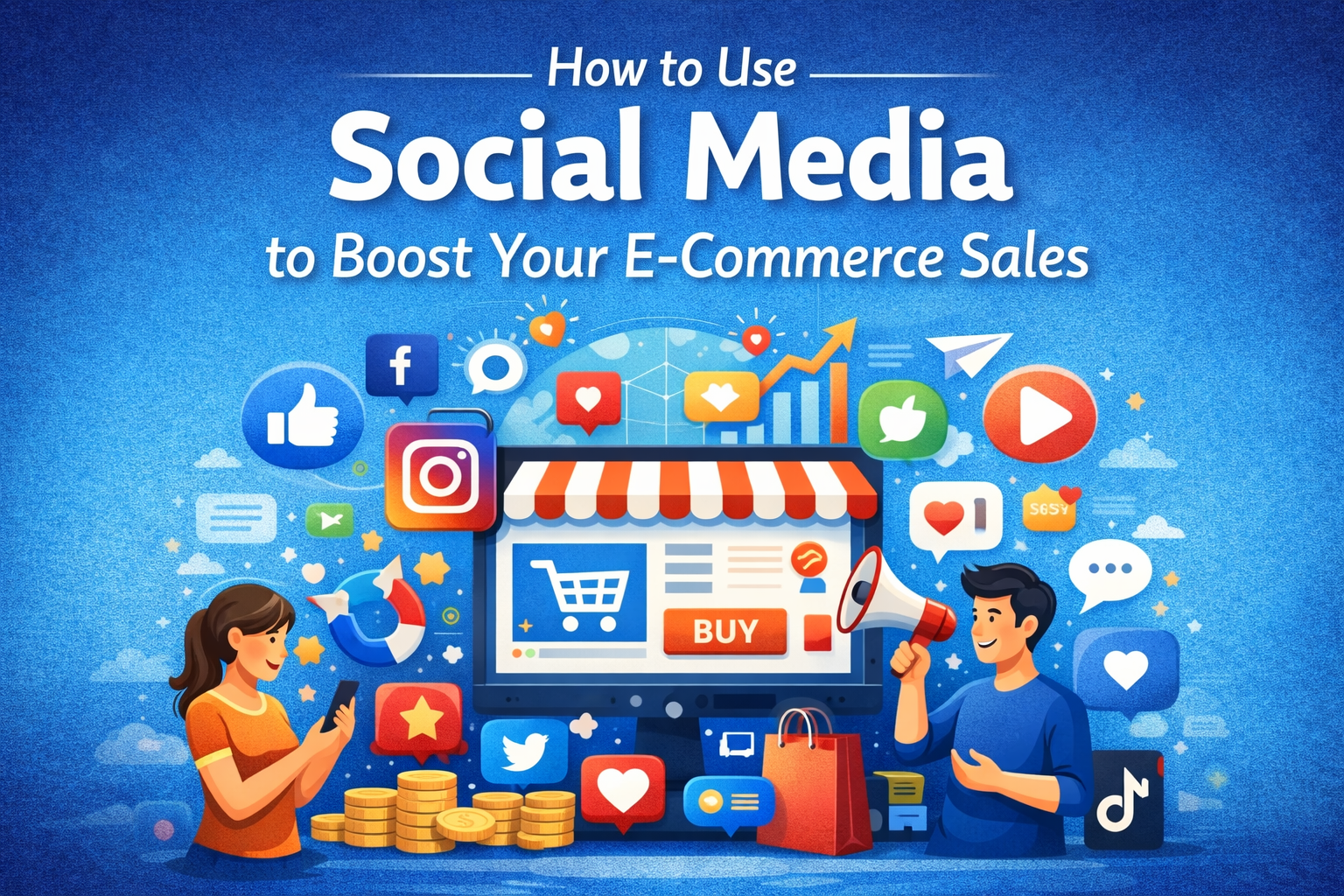
How to Use Social Media to Boost Your E-Commerce Sales
Learn how to use social media to boost your e-commerce sales in 2026 — which platforms to focus on, content that converts, social commerce, and the tools to manage it all.

Disclosure: This post contains affiliate links. If you sign up through them, we may earn a
commission at no extra cost to you. We only recommend tools we believe help sellers grow their sales.
Read our full Affiliate & Earnings Disclaimer.
Social media is where your customers already spend hours every day — scrolling, discovering, and buying. For an e-commerce store, it’s one of the most powerful (and affordable) engines for driving traffic, building a brand, and turning followers into paying customers. But posting randomly and hoping for sales doesn’t work. This guide shows you exactly how to use social media to boost your e-commerce sales in 2026 — which platforms to focus on, what content actually converts, how to sell directly in-app, and the tools that make it manageable.
Key Takeaways
- Focus on the 1–2 platforms where your customers actually are, not all of them.
- Short-form video (Reels, TikTok, Shorts) drives the most reach and discovery.
- Social commerce lets shoppers buy without leaving the app.
- User-generated content and reviews convert better than polished ads.
- Consistency and engagement beat follower count for driving sales.
Related reading: Pair this with our
best e-commerce tools for sellers and the
ultimate guide to e-commerce SEO for a full traffic strategy.
Why Social Media Drives E-Commerce Sales
Social media compresses the entire buying journey into one place: shoppers discover products, research them through reviews and creator content, and increasingly buy — all without leaving the app. It’s uniquely powerful for e-commerce because it’s visual (perfect for showing products in action), social (recommendations and UGC build trust), and targeted (you can reach exactly the right buyers). Done well, it drives immediate sales and builds the brand and audience that generate repeat purchases for years.
Choosing the Right Platforms
Don’t try to be everywhere — spread thin, you’ll fail everywhere. Pick the 1–2 platforms where your audience and products fit best:
| Platform | Best For | Content Type |
|---|---|---|
| Visual products, lifestyle brands | Reels, photos, Stories, Shop | |
| TikTok | Viral reach, younger buyers | Short video, trends, TikTok Shop |
| Discovery, long-tail traffic | Product pins, idea pins, guides | |
| Broad reach, older demographics | Posts, groups, Marketplace, ads | |
| YouTube | Demos, reviews, education | Long video, Shorts, tutorials |
For sellers & digital products: Pinterest deserves special attention — pins keep driving traffic for months (unlike posts that vanish in hours), making it one of the best long-term, low-effort sources of store and product traffic.
Content That Actually Converts
Salesy posts get ignored; valuable, entertaining, and authentic content sells. Mix these formats:
- Short-form video — Reels, TikToks, and Shorts get the most reach; show products in use, before/afters, and quick tips.
- User-generated content — real customers using your products build trust no ad can match.
- Behind-the-scenes — your process, packing orders, your story; humanizes the brand.
- Educational content — how-to and tips that make your product the solution.
- Social proof — reviews, testimonials, and results.
- Product features — but framed around benefits and problems solved, not specs.
Create it efficiently with Canva for graphics and CapCut for video editing — both let a solo seller produce scroll-stopping content for free. Follow the 80/20 rule: 80% value and entertainment, 20% direct promotion.
Selling with Social Commerce
Social commerce removes friction by letting people buy in-app. Set up Instagram Shopping, TikTok Shop, Facebook Shops, and Pinterest Product Pins so shoppers can go from discovery to checkout in a few taps. Tag products directly in posts, Reels, and Stories. The fewer steps between “I want that” and “purchased,” the more you sell — and platforms like Shopify sync your catalog to all these channels automatically, so you manage products in one place.
UGC, Influencers & Reviews
The most persuasive social content doesn’t come from you — it comes from customers and creators. Encourage user-generated content by reposting customers, running hashtag campaigns, and incentivizing photo/video reviews with tools like Loox. For influencers, micro-influencers (roughly 10k–100k followers) often outperform big names on ROI because of higher engagement and lower cost — partner with creators whose audience matches your buyers. Authentic recommendations convert far better than polished brand ads.
Paid Social Advertising
Organic builds slowly; paid ads scale fast. Meta (Facebook/Instagram) and TikTok ads let you target precise audiences and retarget people who visited your store or abandoned carts. Start with a small budget, test creatives, and scale what’s profitable. The key is measuring true profitability, not just clicks — a tool like Triple Whale shows real ad ROI so you don’t scale losing campaigns. Retargeting warm audiences (site visitors, cart abandoners) almost always delivers the best return.
Tools to Manage It All
Consistency is the hardest part — these tools make it sustainable:
| Need | Tool | Why |
|---|---|---|
| Scheduling | Buffer / Later | Plan and auto-post across platforms |
| Content recycling | SocialBee | Re-share evergreen posts automatically |
| Graphics | Canva | On-brand visuals, no designer |
| Video editing | CapCut | Fast short-form video, free |
| Email capture | Klaviyo | Turn social traffic into a list you own |
| Ad tracking | Triple Whale | Measure true ad profitability |
Own your audience: Social platforms can change algorithms overnight. Always funnel followers to your email list (with Klaviyo) so you own the relationship — not the platform.
Frequently Asked Questions
Which social media platform is best for e-commerce?
It depends on your products and audience. Instagram and TikTok excel for visual and viral products; Pinterest is best for long-term discovery traffic; Facebook reaches broad and older audiences. Pick the 1–2 where your buyers are.
How often should I post to drive sales?
Consistency matters more than frequency. Aim for a sustainable cadence you can maintain — often 3–7 times a week per platform — with a mix of value content and product posts. Use a scheduler to stay consistent.
Do I need paid ads, or is organic enough?
Organic builds an audience over time for free; paid ads scale fast and enable retargeting. Many stores start organic to learn what content works, then add paid ads to accelerate once they see traction.
How do I turn followers into customers?
Make buying easy with social commerce, share social proof and UGC, run promotions, and — most importantly — capture emails so you can nurture followers into buyers and repeat customers over time.
What content sells best on social media?
Short-form video showing products in action, user-generated content, and authentic behind-the-scenes posts outperform polished ads. Lead with value and entertainment; sell subtly using the 80/20 rule.
Turning Social Media Into Sales
Social media rewards sellers who show up consistently, create authentic value, and make buying effortless. Pick the platforms where your customers are, post content that entertains and helps, set up social commerce so shoppers can buy in a tap, and always funnel followers to an email list you own with Klaviyo. Use Buffer and Canva to stay consistent without burning out. Do this steadily, and social media becomes one of your most reliable sales channels.
Want a social media sales playbook?
Grab our e-commerce social media kit — content calendars, post templates, and caption frameworks — from the shop, and turn your feed into a sales engine.
Browse the Template Shop →